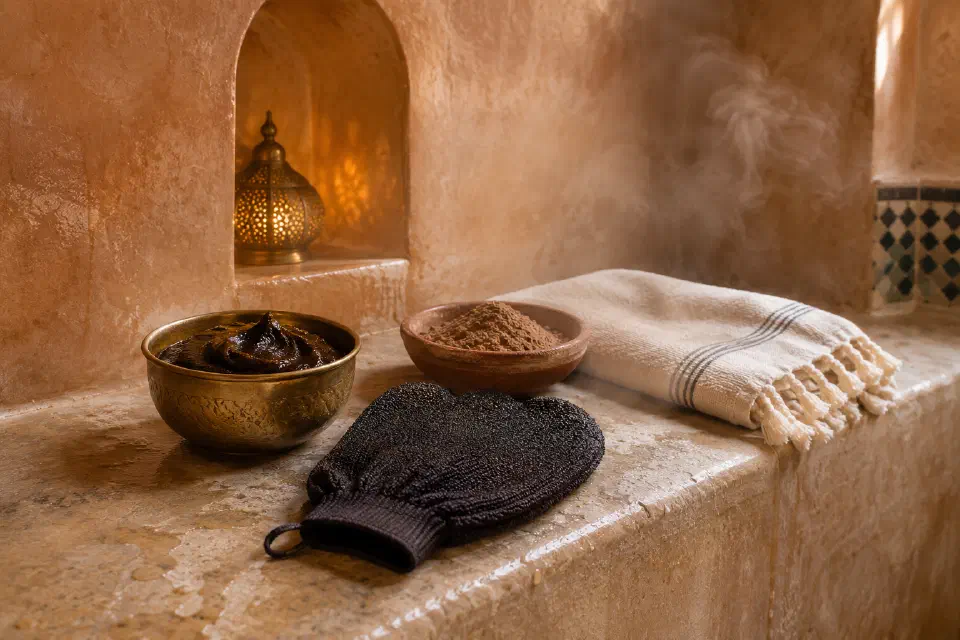
Warm water, a soft towel and a few carefully chosen products can give an everyday bath a slower rhythm. A home hammam takes inspiration from a Moroccan ritual, adapted to your bathroom, your time and your skin.
Three elements of the Moroccan hammam
Morocco’s national tourism office, ONMT, lists black soap, ghassoul and a kessa mitt among traditional hammam products. They offer a starting point for exploring the ritual, rather than a compulsory routine for everyone. Source: Visit Morocco.
Savon noir is black soap, often sold as a paste; choose a body cosmetic, not a household cleaner. Kessa is a mitt for mechanical exfoliation. Rhassoul, also spelled ghassoul, is a clay used in personal care. Each has a different role, and you do not need to use all three in one session.
How can hammam support skin comfort and wellbeing?
The clearest benefits are cleansing, gentle smoothing and care that reduces dryness. Each step has a role: washing removes dirt, kessa exfoliates, and the finishing moisturiser helps retain water. Emollients soften skin and reduce roughness. DermNet — emollients and moisturisers.
A leisurely bath can also offer a pleasant pause in the day. Treat that as a personal way to unwind, without assigning therapeutic effects to a home hammam. Intense sweating or vigorous scrubbing is unnecessary.
Match the number of steps to your skin’s comfort. If it feels tight or stings afterwards, shorten the next session and reduce exfoliation. Comfortable skin after bathing is a more useful goal than completing every step.
What to prepare
Keep cosmetic black soap, a clean kessa mitt, a towel and a familiar moisturizer within reach. For an optional rhassoul step, add a small bowl and water. Read each product’s intended use, ingredients and instructions: contact times and mixing directions may differ.
Avoid adding extra ingredients simply because they sound natural. Keep your first version simple. Fragrance, candles and decorations are optional touches, not requirements.
1. Start with a comfortable shower
Arrange your bathroom so everything is easy to reach. Choose comfortably warm rather than hot water. You do not need dense steam or a long period of heating the room. Let this be a quiet start to your bath, without a rigid countdown.
2. Apply black soap, then rinse thoroughly
Use your hands to spread the product on damp body skin as directed. Avoid eyes and mucous membranes. If the manufacturer specifies a contact time, follow it rather than borrowing instructions from another product. Rinse thoroughly before moving on.
A sequence of soap, mitt and finishing care also appears in Moroccan cooperative Arjana’s hammam guide. In our home version, the individual product’s instructions determine application time and intensity. Source: Cooperative Arjana.
3. Use the kessa gently — or skip it
Dampen the mitt and use short, light strokes without pressing hard. Keep a body mitt for the body rather than using it on the face. Stinging or pain means stop, not scrub harder.
The American Academy of Dermatology notes that exfoliation is not suitable for everyone. Avoid wounds and sunburned skin. If your skin is sensitive or you use retinoids, discuss a suitable method with a dermatologist. Source: AAD.
4. Treat rhassoul as optional
If you want to include clay, choose a product intended for the area you will apply it to. Mix a portion, apply and rinse according to its directions. Do not extend the application time in pursuit of a stronger result. You can also save this step for another bath.
Do not assume that one rhassoul product is suitable for body, face and hair alike: check its label. Arjana’s guide also advises against letting a clay mask dry completely and become hard. Source: Cooperative Arjana.
5. Finish with care and clean your accessories
Rinse away any remaining product, pat dry with a towel and apply a suitable moisturizer. AAD also recommends moisturizing after exfoliation. There is no universal exfoliation schedule: frequency depends on your skin and the method used. Source: AAD.
Wash the mitt according to its care instructions and let it dry completely in an airy place. Avoid putting a wet mitt in a closed washbag. Rinse the clay bowl and store accessories clean and dry for next time.
Choosing your first set
Start with clearly labelled products and straightforward instructions. Maroc Collective’s planned collection has separate pages for black soap, kessa, rhassoul and the Hammam Set. The collection is in preparation; final ingredients and specifications will be published once the products are confirmed. The links below explain their roles and help you plan your own ritual.